Agent Node (Realtime)
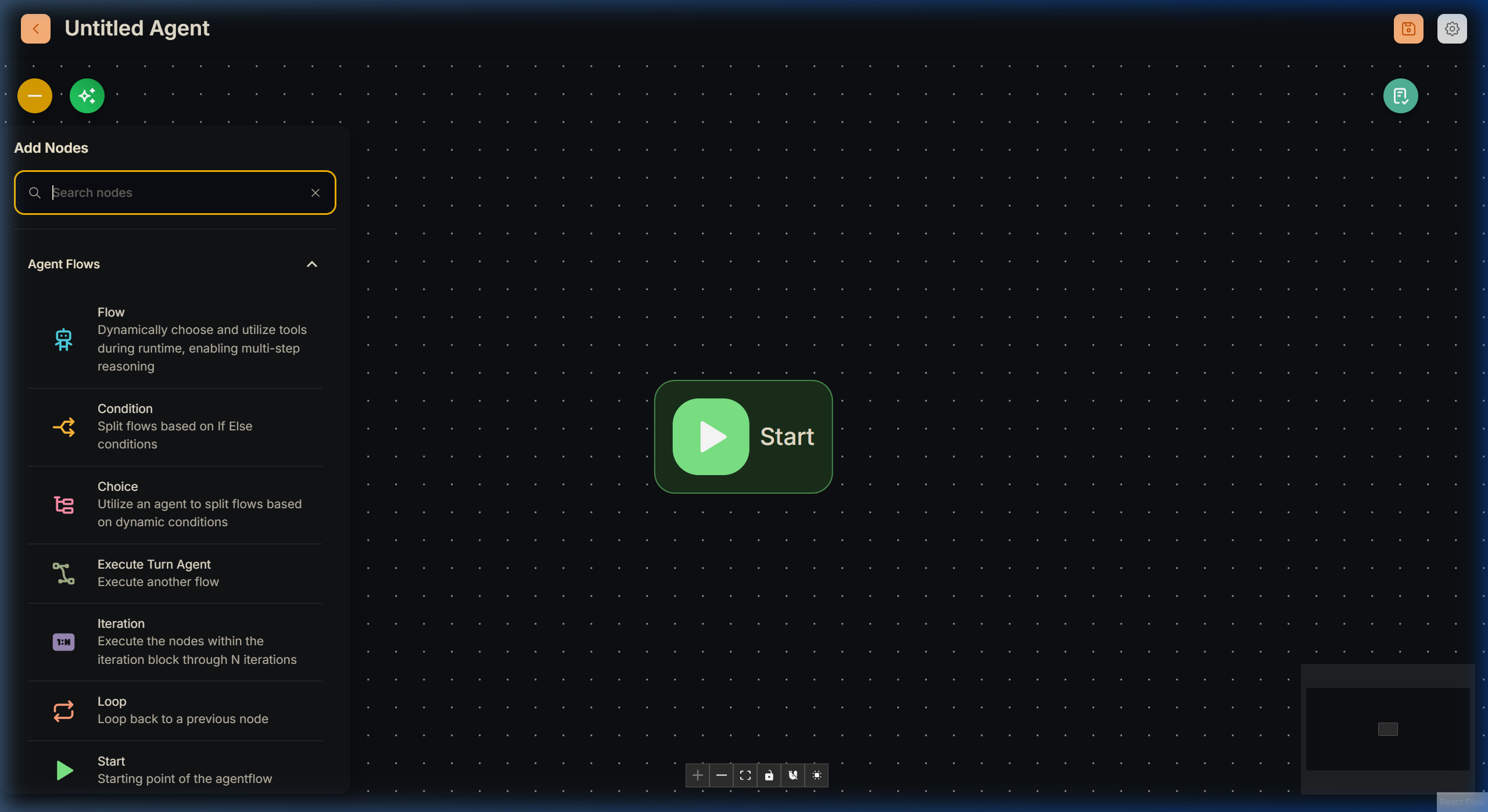
The Agent Node on the Realtime Canvas acts as the high-speed duplex brain of your voice/audio interaction. Unlike its standalone V2 counterpart which waits for a complete document to return, the Realtime Agent is inherently configured to stream fractional delta updates backward.
How It Works
The Agent is heavily dependent on the Lyntaris WebSocket integration. As the Agent internally processes a user's transcript, it delegates execution.
Live Audio Interception
The real magic occurs over the wire. As the node is thinking, it outputs tiny string chunks (e.g. {"respons).
The Lyntaris client runtime handles stream chunks as they arrive:
- For normal spoken text, audio can start before the model finishes the whole utterance, so lip-sync can track partial output.
- For tool or command turns, the stream switches to a structured tool payload; the client pauses speech and runs the allowed action, then resumes.
[!WARNING] On the Realtime Canvas you generally cannot wire arbitrary Tool nodes or HTTP hooks the same way as on V2. Tooling for voice is constrained by what the client runtime exposes for that deployment.
System prompts and compact graphs
For kiosk or call-center voice, the client may supply a compact graph backbone (loops, iterations, and strict routing). Design your Agent node so it stays consistent with that backbone—engineering docs describe the JSON contract when you customize telephony entry points.